Choosing a luxury condo in Arlington can feel simple at first, until you realize you are not just choosing a unit. You are choosing a building, a Metro corridor, a monthly fee structure, and a daily lifestyle. If you want the right fit, it helps to compare Arlington the way local planning actually works: by station area and building type, not by one broad countywide label. Let’s dive in.
Start With Arlington’s Condo Corridors
In Arlington, luxury condo shopping is often a corridor decision. The county’s planning framework concentrates higher-density development near Metro, especially within about a quarter-mile of station entrances, and the Rosslyn-Ballston corridor alone includes seven mixed-use, walkable, bicycle-friendly transit villages with more than 47,000 residential units.
That matters because the right building for you may depend less on the zip code and more on how you want to live day to day. In most cases, you will be comparing building age, amenities, fee structure, and access to transit, retail, and public spaces.
Match the Corridor to Your Lifestyle
Rosslyn for a Strong DC Edge
If you want the most urban feel in Arlington, Rosslyn usually rises to the top of the list. The county says the Rosslyn Metro Station Area has more than 6,000 residences within a 10-minute walk, and WMATA places Rosslyn on the Orange, Silver, and Blue lines as the first Virginia stop on those lines.
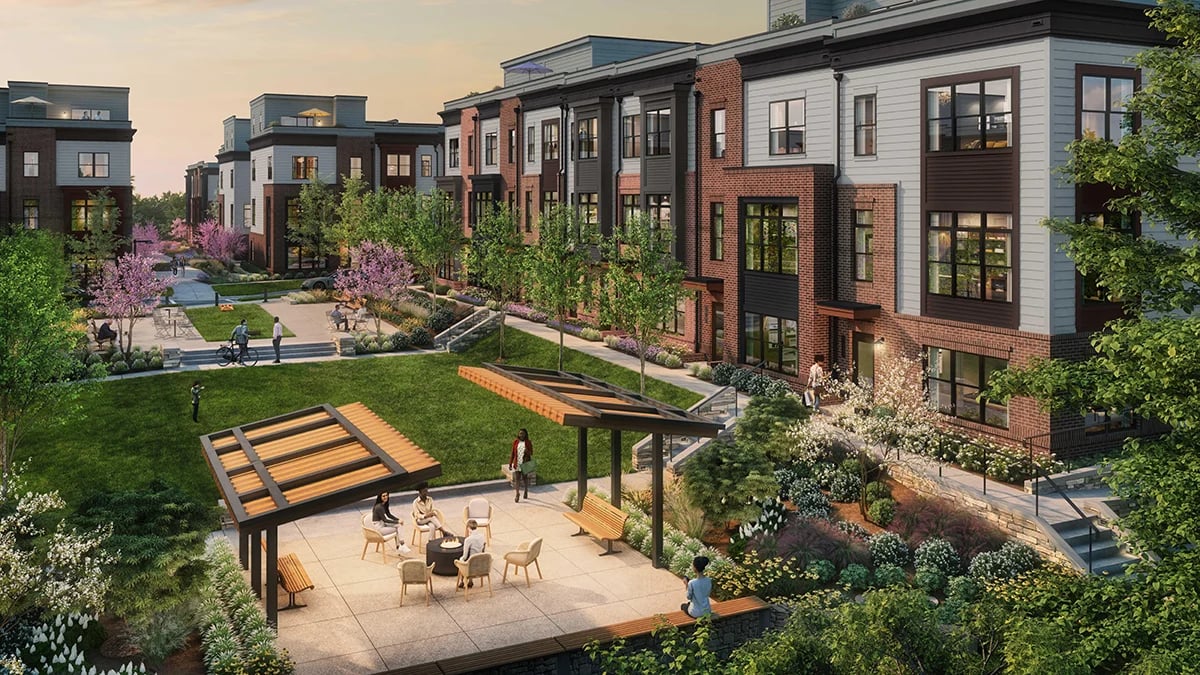
For you, that can mean a stronger skyline feel and a commute that feels especially direct to downtown DC. Rosslyn also includes a mix of high-rise condo buildings, older smaller buildings, and newer luxury townhouses, so building style can vary quite a bit even within the same area.
Clarendon for Street Life and Dining
If your ideal condo lifestyle includes walkability, restaurants, nightlife, and a lively urban-village atmosphere, Clarendon deserves a close look. Arlington describes Clarendon as a walkable urban village with upscale and local retail, bars, restaurants, office buildings, public art, open space, and tree-lined streets.
Clarendon is often a strong fit if you want more street activity than you may find in Courthouse or Virginia Square. The housing mix also includes condos alongside apartments, office buildings, and lower-density homes, which can create more variation from one block or building to the next.
Ballston for Transit and Balance
Ballston is a practical choice if you want a broader blend of convenience and city energy. County planning describes Ballston as a 260-acre mixed-use area with commercial, office, and residential properties, plus direct access to I-66 and Glebe Road.
If you like the idea of Metro access paired with shopping and a more balanced urban-suburban feel, Ballston can be appealing. It is one of Arlington’s most established station areas, which often means you will see a wider mix of older and newer condo options.
Courthouse for Metro Convenience
Courthouse tends to appeal to buyers who want access and walkability without centering their lifestyle around nightlife. Arlington notes that Courthouse combines residential, government, office, and retail uses, with redevelopment focused around the Metro core while nearby neighborhoods are preserved.
WMATA also notes the station is within walking distance of county administration buildings and the court complex. In practical terms, that often gives Courthouse a more civic and steady feel than Clarendon.
Virginia Square for a More Residential Feel
If you want a quieter station-area experience, Virginia Square may be the right fit. The county describes Virginia Square as predominantly residential and a center for cultural, educational, and recreational activities.
Its planning vision includes amenities such as a university campus, arts center, performance space, and parks. For many buyers, that translates to a more residential atmosphere and less high-energy street activity than other stops along the corridor.
Crystal City and Pentagon City for Newer Redevelopment
If you are drawn to large-scale redevelopment and a more contemporary mixed-use setting, focus on Crystal City and Pentagon City. Arlington says Crystal City-Pentagon City is being planned as a more vibrant, walkable, transit-oriented corridor with more housing, stronger retail, and better public spaces.
The county highlights Restaurant Row and underground retail, while WMATA notes Pentagon City directly connects to Fashion Centre at Pentagon City. For many luxury buyers, this is where Arlington’s newest redevelopment energy is the easiest to see.
Compare Buildings, Not Just Neighborhood Names
Once you narrow your preferred corridor, shift your focus to the building itself. In Arlington, two luxury condo buildings a few blocks apart can offer very different ownership experiences.
A newer building may have a different fee structure, service model, and maintenance outlook than an older building that has already gone through major upgrades. That is why the smartest comparison is building to building, not just area to area.
Check the Building’s Age and Renovation Cycle
Building age matters, but not in a simplistic “new is always better” way. Based on Arlington’s planning context, Rosslyn and Crystal City/Pentagon City are more likely to include newer luxury inventory, while Clarendon, Courthouse, and Ballston often offer a broader mix of older and newer buildings.
Your goal is to understand where the building sits in its renovation cycle. An older building may offer more established space and a strong location, but you should also understand whether major systems or shared areas may need work in the near future.
Look Beyond the Monthly Condo Fee
A condo fee only helps you if you understand what it covers. The Consumer Financial Protection Bureau notes that condo or HOA dues are typically separate from your mortgage payment and can range from a few hundred dollars a month to more than one thousand dollars a month.
Fannie Mae explains that condo fees can support maintenance, insurance, and reserve savings. So instead of asking only whether the fee feels high, ask what the fee is buying and whether the building appears well-prepared for future repairs.
Judge Amenities by Actual Use
Luxury amenities can look impressive on paper, but their value depends on how you live. Fannie Mae’s consumer guidance suggests treating amenities as a value question, not a status question.
For you, that means comparing the monthly fee against the common areas, services, parking, and overall building support you will actually use. A building with fewer amenities but stronger reserve support may be the better long-term fit than one with a flashy package and less clarity around future costs.
Ask for the Right Documents
Before you compare two buildings side by side, ask for the same key information from each one. That gives you a cleaner, more realistic view of cost, condition, and risk.
According to Fannie Mae’s project review guidance, financial stability, structural condition, reserve funding, and special assessments are central issues in condo review. A simple document checklist can save you from making a decision based only on finishes or location.
Your Arlington Condo Document Checklist
- HOA budget
- Most recent reserve study
- Any current or planned special assessments
- Remaining useful life of major building components
- Plain-English summary of what dues cover
If a building is hard to evaluate because this information is incomplete or unclear, that is useful information too. In many cases, clarity is a sign of stronger management and a smoother buying process.
Verify Transit Conditions Before You Write
In Arlington, Metro access often shapes condo value and day-to-day convenience. If station access is central to your decision, it is worth checking current conditions before you write an offer.
As of March 29, 2026, WMATA says Rosslyn station has escalator replacement work expected to finish by June 2026, and Crystal City has weekend closures through June 2026 tied to a second entrance project. Those updates do not necessarily change where you buy, but they can affect your short-term expectations.
A Simple Framework for Choosing
If you want to narrow your options quickly, start with the daily experience you want most.
- Choose Rosslyn if you want the strongest DC edge, skyline feel, and Orange/Silver/Blue access.
- Choose Clarendon if you want walkability, dining, nightlife, and an urban-village setting.
- Choose Ballston if you want transit, shopping, and a balanced mixed-use environment.
- Choose Courthouse if you want Metro convenience in a more civic setting.
- Choose Virginia Square if you want a more residential station area with cultural and recreational amenities.
- Choose Crystal City or Pentagon City if you want visible redevelopment, airport proximity, and a contemporary mixed-use environment.
From there, compare the specific buildings in your preferred corridor based on age, reserves, amenities, dues, and the building’s overall maintenance story. That is usually the difference between buying a condo that simply looks right and buying one that truly fits your goals.
When you are ready to compare Arlington luxury condo buildings with a more strategic lens, Falcone Real can help you sort through location, building quality, fees, and long-term fit so you can move forward with confidence.
FAQs
What is the best Arlington area for a luxury condo near DC?
- If your top priority is quick-feeling access to downtown DC and a strong urban skyline feel, Rosslyn is often the best fit because it is the first Virginia stop on the Orange, Silver, and Blue lines.
What should you review before buying an Arlington luxury condo?
- You should review the HOA budget, reserve study, any current or planned special assessments, the remaining useful life of major building components, and a clear summary of what the condo dues cover.
Are condo fees included in an Arlington luxury condo mortgage payment?
- No. The CFPB says condo or HOA dues are usually paid separately to the association and are not part of the monthly mortgage payment.
Which Arlington condo areas feel more residential?
- Virginia Square is generally the most residential-feeling station area in this group, and Courthouse can also appeal to buyers who want Metro access in a less entertainment-driven setting.
Where is newer luxury condo redevelopment most visible in Arlington?
- Crystal City and Pentagon City usually stand out if you want to focus on newer large-scale redevelopment and a more contemporary mixed-use environment.